 Ελληνικά
 English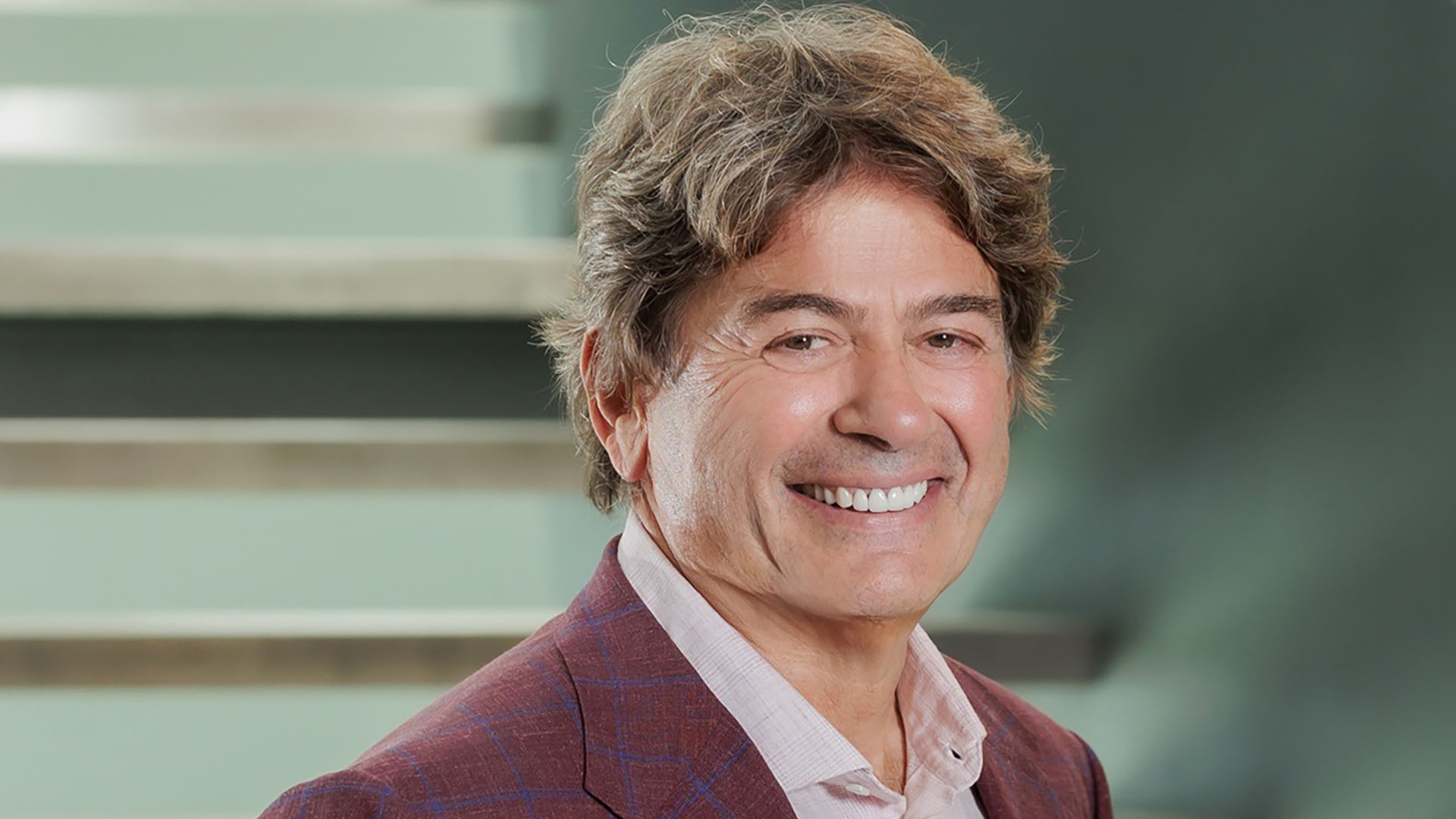
By Maria Akrivou · Fortune Greece · 22/09/2026
His career path is especially impressive, and rare. A brilliant scientist who left Thessaloniki almost thirty years ago to chase his dream on the other side of the Atlantic went on to found five companies, three of which entered the Nasdaq index.
Along the way, he created Regulus Therapeutics, which Novartis acquired for $1.7 billion. Today, as Chairman of Connect Biopharma and CEO of Senvera Therapeutics, he continues to leave his mark on the industry.
I met Kleanthis Xanthopoulos at the of Athens Life Tech Park event on September 10th, where he was one of the event's main speakers. The Park is the first integrated biotechnology park in Southeast Europe, an €80 million investment in Attica that aims to make our country an international biotechnology hub. Drawing on his long experience, he shares his thoughts on how Greece can avoid imitating the developed, established medical ecosystems abroad. Instead, he argues, it should identify its own strengths and build enough depth to matter internationally.
We talked about the role of artificial intelligence and the fine lines that someone wearing both the scientist's and the entrepreneur's "hat" must watch. He pointed out to me that business value follows scientific and clinical value. We also discussed what innovation ultimately means in a sector where it is the driving force.
Mr Xanthopoulos, the investment in Athens LifeTech Park creates a new biotechnology hub in Greece. What is the real change it brings to the ecosystem?
The real change isn't the building. It's what can happen inside it and around it. Greece has always had very good scientists, strong universities and a significant pharmaceutical manufacturing industry. What it didn't have to the same degree were the mechanisms that connect these pieces and allow a good scientific idea to reach patients.
In biotechnology, that next step is the hard one. The distance from an interesting discovery to a medicine is enormous. You need infrastructure, capital and partnerships. Most of all, you need people who have made that journey before and can judge when an idea deserves to move forward, how it should move forward, and when it should stop.
That is what I believe Athens LifeTech Park can offer. Not just space, but the necessary combination of science, experience, ideas and capital.
I like to think of it as a modern scientific “Agora”: a place where a scientist can find themselves next to an entrepreneur, an investor, or someone who had the enormous good fortune to develop a drug.
The infrastructure is the platform. The real value will be created by the interactions that happen on it. In the major biotech ecosystems, these encounters happen all the time. And very often, that is where a new company, a partnership or, ultimately, a new medicine begins.
“When technology changes, the geography of opportunity changes too.”
What will be possible here that until now happened only in Boston, San Diego or the Bay Area?
Those ecosystems took decades to build and grew under very specific conditions. What is worth understanding is why they work.
I lived and worked in environments like these for many years. What always impressed me wasn't only the quality of the science. It was how direct and fast the path is from science to entrepreneurship and capital.
A researcher with a good idea could, fairly quickly, find themselves across the table from someone who had already built two or three companies, from an investor who understood the science, or from a pharma executive who knew what it takes to bring a programme into clinical development.
That can't be copied. But it can be cultivated.
And that is where I see the opportunity for Greece. Not to copy San Francisco, but to decide where it can be truly good, and build enough depth there to matter internationally.
Biotechnology is at a turning point: RNA therapeutics, AI-driven drug discovery, personalised medicine. What do you think will be the “next big thing” that changes the game over the next 5-10 years? And which country will capitalise on it first?
If I had to choose one technology platform, I would choose genetic medicines: cell and gene therapies, and RNA therapies. This is about understanding the genetic code where it is not written correctly, and digitally correcting it so that the underlying causes of disease can be addressed. I believe these will be among the most important therapeutic platforms of the coming decades, because they allow us to intervene with far greater precision in the genetic mechanisms of each disease.
What I find even more interesting, though, is the convergence: what happens when genetic medicines and new therapeutic approaches meet artificial intelligence, genetics and huge volumes of biomedical data.
In my view, the deepest impact of AI won't simply be that we design drugs faster. It will be that we understand biology itself better. And that matters far more. Because the better we understand the mechanism of a disease, the more intelligently we can intervene.
AI can help us formulate better hypotheses, select targets, design molecules and analyse data at a scale that until recently wasn't feasible. But it doesn't abolish biology. If the initial biological hypothesis is wrong, AI may simply get us to the wrong answer faster.
As for which country will capitalise on it first, I wouldn't see it that way. Innovation in biotechnology is now global. The advantage will go to ecosystems that can quickly connect good science, data, experienced people and capital.
And that is interesting for a country like Greece. When technology changes, the geography of opportunity changes too. The advantage of the big hubs doesn't disappear, but room opens up for smaller ecosystems that know where they want to focus.
“We tend to believe that if you have good science, infrastructure and capital, you have almost everything you need. That's not the case.”
As Chairman of Connect Biopharma and CEO of Senvera Therapeutics, you see first-hand how the global market is evolving. What strategy should Greece follow to become a “protagonist” rather than just a regional player? Where should it invest?
Greece must first decide what it will not do. We are a small country. We cannot achieve critical mass in every area of biotechnology, and there is no reason to try.
We need to look very clearly at where we already have excellent science, clinical experience, people with an international presence and, where it exists, industrial know-how. We should choose a few areas where these elements come together and invest there for the long term.
And when I say investment, I don't mean only labs and equipment. Those are essential, but they can be bought. Experience can't be bought so easily. It is enormously valuable for a young scientist to be able to work alongside someone who has already taken a molecule into clinical development, built a biotech, raised capital, or made mistakes and knows what they would do differently the second time.
And there is one more prerequisite: any biotech company that starts in Greece must think internationally from day one. There is no Greek biotech market in the sense that there is a Greek market for other sectors. The market is global. What we want, though, is to bring treatment closer to patients here too. We want to develop therapies for the whole planet, not only for Greece.
What strategy allowed you to turn scientific knowledge into business value?
I started as a scientist and, even today, running companies, I still see things through science first.
What I understood fairly early, though, is that an important discovery can end up as an excellent publication and stop there. If you want it to reach the patient one day, at some point you have to start asking a different kind of question.
Is there a real medical need? Can this science become a drug? What is the experiment that can quickly tell us whether we're right or wrong? Do we have the right people, with the experience and knowledge to guide the drug development process to a successful outcome? And above all, is this an idea worth devoting years of our lives and very significant capital to?
Scientists and entrepreneurs can easily become attached to their idea. In biotechnology, that can lead to getting trapped. You need enough conviction to keep going when things get hard, but also enough discipline to say “I was wrong” when that is what the data show.
For me, business value is not the starting point. First you have to create scientific and clinical value. If you do that really well, business value can follow.
“Innovation requires making decisions without having all the answers.”
One of the companies you founded and led, Regulus Therapeutics, was later acquired by Novartis for $1.7 billion. What does Greece need in order to see similar value-creation stories start here too?
We tend to believe that if you have good science, infrastructure and capital, you have almost everything you need. That's not the case.
Building a biotech company is a skill in itself. You need to know when a scientific discovery can be turned into a drug discovery and development process, how to protect the intellectual property, which experiments must come first, how to plan the path to clinical development, when to raise capital, and what team you need at each stage. And you need to be able to do all of this to the standards of a company that will compete internationally.
This kind of experience doesn't yet exist in Greece at the scale we would like. But it exists to an impressive degree among Greeks who have built careers abroad.
That's why I believe strongly in the diaspora. Not necessarily in the way we often talk about brain gain. Not everyone needs to return to Greece permanently. A scientist or executive in America can advise a Greek startup. An investor in London can connect it with capital. A Greek executive at a multinational pharma company can open a door that would otherwise take years.
That's why, for me, the next step after brain gain is brain circulation. Our ambition shouldn't be that no one ever leaves Greece. I left too, and international experience shaped my own path.
What was the hardest decision you made before the market matured, and how can that mindset guide young Greek scientists?
The hardest decisions in my career were usually not the boldest ones. They were the ones where I had to decide that something should not continue.
In biotechnology you may have invested years in a programme, have excellent people who believe in it and significant capital behind it, and at some point the data tell you that you have to stop. That is a much harder decision than starting something new. Human biology is complex. Drug development is equally very difficult. You must always be ready to evaluate and prioritise, and having luck on your side always helps.
Because you're not only deciding about a scientific hypothesis. You're deciding about people who have invested years of their lives, about investors who trusted you and, ultimately, about patients who are waiting.
That's where I learned something I consider fundamental: financial reality cannot change biological reality. If the data tell you that you're wrong, you have to be ready to accept it, no matter how much you have already invested.
That's what I would tell a young scientist too. Innovation requires making decisions without having all the answers. It doesn't mean you have to love risk. It means you have to learn to understand it and, above all, never let your love for your idea become stronger than the data.
“For me, the next step after brain gain is brain circulation.”
Translated from Greek. Source: https://www.fortunegreece.com/interview/kleanthis-xanthopoulos-enas-serial-entrepreneur-ston-xoro-tis-viotexnologias-me-pagkosmio-apotipoma/